

Eimskip
Consolidating and Modernising a Multi-Vendor Cloud Estate with Microsoft Azure
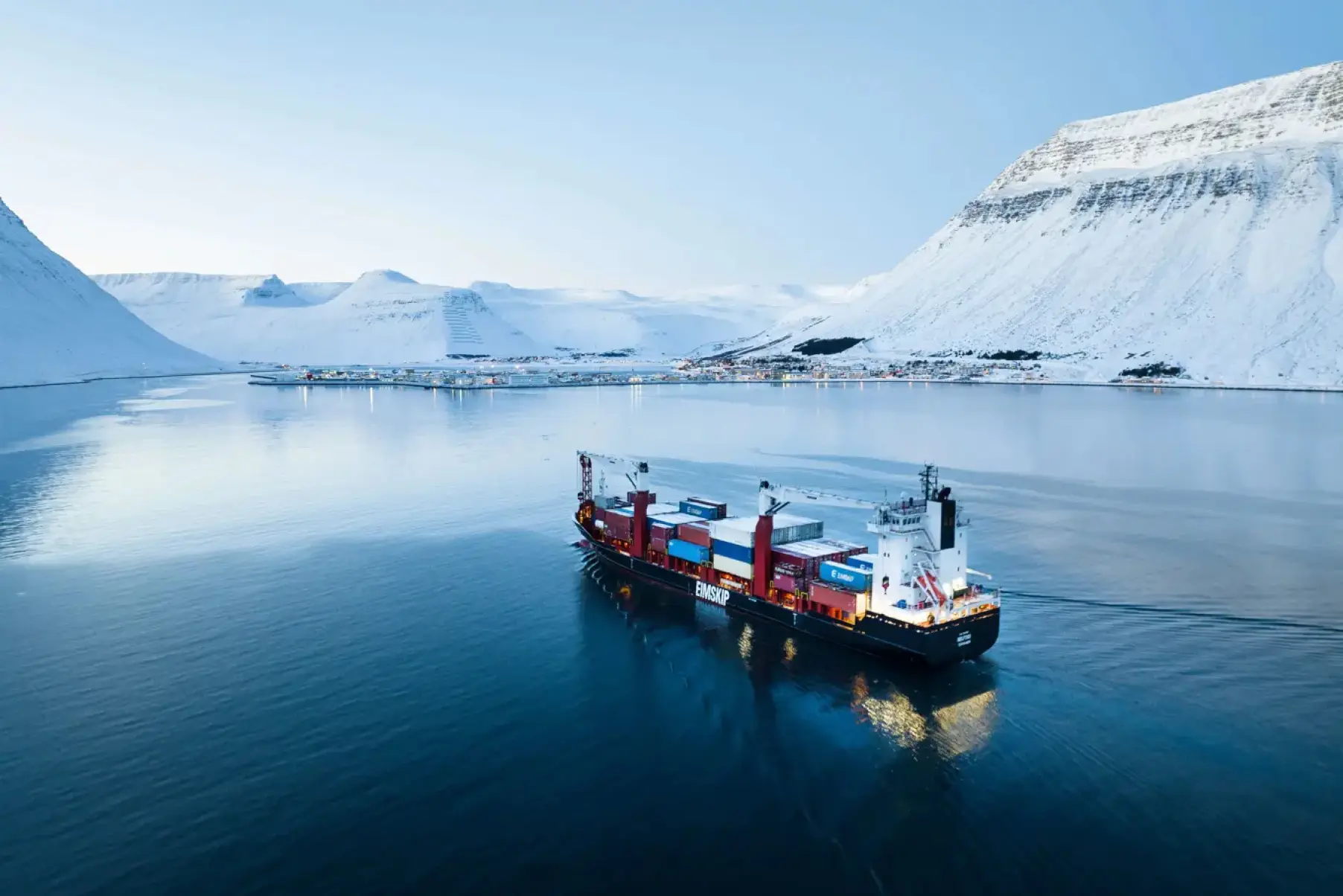
Eimskip — Eimskipafélag Íslands hf. — is one of Iceland's oldest and most storied companies, founded on 17 January 1914 with the backing of approximately 15,000 shareholders, representing nearly 17% of Iceland's population at the time. For over a century it has been described as “órskabarn þjóðarinnar” — the nation’s favourite child — a reflection of the central role it has played in connecting Iceland to the world. Today Eimskip is the dominant transportation company in the North Atlantic, operating 13 vessels across six scheduled liner routes, 58 offices in 20 countries across four continents, and a workforce of approximately 1,640 people. The company is publicly listed on Nasdaq Iceland, with roughly half of its revenue derived from operations outside Iceland.
The Challenge
Eimskip’s web estate had grown organically across its subsidiary structure, resulting in a fragmented hosting landscape spread across multiple providers and environments. When the decision was taken to refresh the company’s web presence — with Vettvangur leading the frontend and backend redesign — it created a natural inflection point to rationalise the underlying infrastructure at the same time.
A Fragmented Multi-Vendor Landscape
At the outset of the project, Eimskip operated six distinct web solutions with no common hosting foundation:
- The NAA and TVG-Zimsen solutions were hosted on separate Azure tenants managed by Vettvangur
- The primary corporate sites — eimskip.is and eimskip.com — along with the Atlantic Trucking and Cargocan solutions, were hosted in Eimskip’s own on-premises data centre
In addition, Eimskip relied on several external managed service providers — including Advania and Tietoevry — for aspects of its environment management. This created a coordination overhead that slowed decision-making and complicated any attempt at consistent security or operational governance across the estate.
The Challenge
Eimskip’s web estate had grown organically across its subsidiary structure, resulting in a fragmented hosting landscape spread across multiple providers and environments. When the decision was taken to refresh the company’s web presence — with Vettvangur leading the frontend and backend redesign — it created a natural inflection point to rationalise the underlying infrastructure at the same time.
A Fragmented Multi-Vendor Landscape
At the outset of the project, Eimskip operated six distinct web solutions with no common hosting foundation:
- The NAA and TVG-Zimsen solutions were hosted on separate Azure tenants managed by Vettvangur
- The primary corporate sites — eimskip.is and eimskip.com — along with the Atlantic Trucking and Cargocan solutions, were hosted in Eimskip’s own on-premises data centre
In addition, Eimskip relied on several external managed service providers — including Advania and Tietoevry — for aspects of its environment management. This created a coordination overhead that slowed decision-making and complicated any attempt at consistent security or operational governance across the estate.
The Engagement
Gunnar was engaged to design and deliver the full Azure infrastructure component of the project, working alongside Vettvangur who handled the web application layer. The multi-vendor coordination requirement — spanning Advania, Tietoevry, Vettvangur, and Eimskip’s own IT team — added a significant planning and alignment dimension to what was already a technically broad engagement.
Infrastructure as Code with Bicep
The foundation of the new hosting environment was built using Bicep IaC (Infrastructure as Code). Rather than provisioning databases, storage accounts, and web servers manually through the Azure portal, every component of the infrastructure was defined in structured Bicep templates — declarative code that describes the desired state of each resource in precise, version-controlled form.
This approach delivered three concrete advantages. First, it eliminated the configuration drift and undocumented manual changes that are endemic in manually managed environments. Second, it created an auditable, repeatable blueprint that makes environment updates, scaling, and future additions straightforward and low-risk. Third, it simplified the multiplication of environments — spinning up a new staging or test environment for any of the six solutions became a templated, automated operation rather than a project in its own right.
DevOps Pipelines and Release Automation
All six solutions were brought into Azure DevOps, with CI/CD pipelines (Continuous Integration / Continuous Deployment) configured to automate the build, test, and release cycle. Critically, separate pipelines were established for frontend and backend components of each solution, allowing independent release cadences. A frontend content update does not require a backend deployment, and vice versa — a separation that meaningfully reduces release friction and the risk of unintended side-effects.
For development and staging environments, releases are fully automated. For production, controlled approval gates ensure that every deployment to live infrastructure is a deliberate, reviewed action — balancing development velocity with operational discipline.
Security Hardening
Security was treated as a first-class concern throughout, not an afterthought. Azure’s native security tooling — including Microsoft Defender for Cloud, Azure Monitor, and network-level controls — was configured across the entire estate. With all six solutions now running in a single, unified Azure environment, consistent security policies and monitoring could be applied centrally for the first time, closing the gaps that inevitably arise in a fragmented multi-vendor setup.
The consolidation also enabled unified cost governance: with all workloads visible in a single Azure subscription structure, detailed cost analysis per service path became possible, providing Eimskip with the operational insight needed to optimise spend going forward.

The Engagement
Gunnar was engaged to design and deliver the full Azure infrastructure component of the project, working alongside Vettvangur who handled the web application layer. The multi-vendor coordination requirement — spanning Advania, Tietoevry, Vettvangur, and Eimskip’s own IT team — added a significant planning and alignment dimension to what was already a technically broad engagement.
Infrastructure as Code with Bicep
The foundation of the new hosting environment was built using Bicep IaC (Infrastructure as Code). Rather than provisioning databases, storage accounts, and web servers manually through the Azure portal, every component of the infrastructure was defined in structured Bicep templates — declarative code that describes the desired state of each resource in precise, version-controlled form.
This approach delivered three concrete advantages. First, it eliminated the configuration drift and undocumented manual changes that are endemic in manually managed environments. Second, it created an auditable, repeatable blueprint that makes environment updates, scaling, and future additions straightforward and low-risk. Third, it simplified the multiplication of environments — spinning up a new staging or test environment for any of the six solutions became a templated, automated operation rather than a project in its own right.
DevOps Pipelines and Release Automation
All six solutions were brought into Azure DevOps, with CI/CD pipelines (Continuous Integration / Continuous Deployment) configured to automate the build, test, and release cycle. Critically, separate pipelines were established for frontend and backend components of each solution, allowing independent release cadences. A frontend content update does not require a backend deployment, and vice versa — a separation that meaningfully reduces release friction and the risk of unintended side-effects.
For development and staging environments, releases are fully automated. For production, controlled approval gates ensure that every deployment to live infrastructure is a deliberate, reviewed action — balancing development velocity with operational discipline.
Security Hardening
Security was treated as a first-class concern throughout, not an afterthought. Azure’s native security tooling — including Microsoft Defender for Cloud, Azure Monitor, and network-level controls — was configured across the entire estate. With all six solutions now running in a single, unified Azure environment, consistent security policies and monitoring could be applied centrally for the first time, closing the gaps that inevitably arise in a fragmented multi-vendor setup.
The consolidation also enabled unified cost governance: with all workloads visible in a single Azure subscription structure, detailed cost analysis per service path became possible, providing Eimskip with the operational insight needed to optimise spend going forward.
Results
The project successfully consolidated six web solutions from three distinct hosting environments into a single, coherent Azure estate — delivering immediate operational benefits and laying the foundation for Eimskip’s digital infrastructure for years to come.
- Unified Estate — all six group web solutions consolidated into a single, consistently governed Azure environment for the first time
- Modern DevOps — automated CI/CD pipelines with separate frontend/backend release tracks, enabling faster, safer deployments
- Consistent Security — centralised security monitoring and hardened configurations applied uniformly across all solutions via Azure’s native tooling
- Cost Visibility — detailed per-service cost analysis now possible, enabling ongoing infrastructure optimisation at group level
“It is not uncommon for groups like Eimskip to have a number of solutions spread across different service providers. Aligning these environments so they can be efficiently managed and operated in one place can often be complex. This enjoyable and challenging project, where many different parties contributed, gave us the opportunity to lay the foundation for a hosting solution that we hope will support further development and work on Eimskip’s web solutions for the foreseeable future.”

Beyond the immediate consolidation, the Bicep IaC foundation and DevOps pipeline architecture position Eimskip to iterate and extend its digital estate efficiently as its business continues to evolve across the North Atlantic and beyond. New subsidiary sites, feature releases, and future integrations can all be delivered against a well-structured, documented, and automated platform.
Results
The project successfully consolidated six web solutions from three distinct hosting environments into a single, coherent Azure estate — delivering immediate operational benefits and laying the foundation for Eimskip’s digital infrastructure for years to come.
- Unified Estate — all six group web solutions consolidated into a single, consistently governed Azure environment for the first time
- Modern DevOps — automated CI/CD pipelines with separate frontend/backend release tracks, enabling faster, safer deployments
- Consistent Security — centralised security monitoring and hardened configurations applied uniformly across all solutions via Azure’s native tooling
- Cost Visibility — detailed per-service cost analysis now possible, enabling ongoing infrastructure optimisation at group level
“It is not uncommon for groups like Eimskip to have a number of solutions spread across different service providers. Aligning these environments so they can be efficiently managed and operated in one place can often be complex. This enjoyable and challenging project, where many different parties contributed, gave us the opportunity to lay the foundation for a hosting solution that we hope will support further development and work on Eimskip’s web solutions for the foreseeable future.”
Beyond the immediate consolidation, the Bicep IaC foundation and DevOps pipeline architecture position Eimskip to iterate and extend its digital estate efficiently as its business continues to evolve across the North Atlantic and beyond. New subsidiary sites, feature releases, and future integrations can all be delivered against a well-structured, documented, and automated platform.